ManaBox MTG
- 4.3
- Rating
- 1.00M
- Installs
- Free
- Price

 Analysis by App-foxy
I found ManaBox MTG most useful when I treated it as a companion for making deck-building decisions, not as a replacement for playing Magic: The Gathering. It is a free tools app from SkillDevs SC, aimed at players who want card information and deck work close at hand while they are away from a computer. After spending time with it, my impression is that its value depends heavily on when and where you use it: with a reliable connection, it can make a quick deck idea much easier to organize; in a weak-signal situation, the experience becomes less predictable.
The app has been available since October 13, 2018, and it has grown into a well-established choice in its niche. Its average rating sits at 4.3 from around 9,800 ratings, with more than 1 million installs. Those figures suggest that it has found a steady audience among Magic players, but they do not remove the need to understand its practical limits. The important question is not simply whether it can help build a deck. It is whether it fits your particular routine: browsing cards at home, checking an idea at a game store, tuning a list between rounds, or trying to keep your collection-related decisions organized on a phone.
How ManaBox MTG feels when your connection matters
I find connection quality shapes the whole session: a stable signal lets me follow a card idea through several possibilities, while a weak one can turn a quick check into a pause. In this section, I’ll look at how I keep research focused and avoid depending on last-minute browsing, then turn to the practical ways a mobile deck workflow fits around play.
You May Also Like

 Blood Strike: 2.5 Anniversary
Blood Strike’s Loadouts Turn Every Drop Into a Tactical Gamble
A close look at Blood Strike’s custom loadouts: how fast access to signature weapons reshapes its battle royale rhythm, rewards preparation, and narrows the gap between fights.

 Pandora - Music & Podcasts
Pandora’s Music Is Easy to Start, but Harder to Recover
Pandora’s strength is its low-effort path from a seed to a station. Its weak spot is how much confidence it asks you to place in connection, setup, and quiet recovery.

 8 Ball Pool
 Is Built on Rivalries, Rematches, and Routine
A close look at the rivalries, rematches, shared routines, and unanswered safety questions that turn a quick pool match into a persistent mobile community.

 Samsung Music
’s Quiet Strength Is Playing What You Already Own
Its reach comes less from spectacle than from dependable access to a personal library. That simplicity is both the app’s strongest retention engine and its ceiling.

 AccuWeather: Weather Radar
AccuWeather Review: A Quick, Clear Forecast for Everyday Decisions
For everyday plans, the best forecast is the one you can understand quickly. AccuWeather makes rain timing, radar, and local conditions easy to act on, with a few trade-offs.

 Hill Climb Racing
Why Hill Climb Racing Still Turns Crashes Into One More Run
A tiny car, a bumpy hill and one more upgrade: Hill Climb Racing keeps resurfacing because its simple chaos makes every near-miss feel personal.
More From Our News Desk



Useful when you are actively looking things up
The strongest moments come when I already have a clear task. If I want to investigate a card, compare possible additions, or shape a deck around a particular idea, having a dedicated Magic tool is more convenient than opening a general browser and moving between unrelated pages. The focused design matters on a small screen because it keeps the purpose of the session clear: I am there to work on a deck or inspect card information, not to search the wider internet.
That focus also changes how I use it. I do not open the app just to wander aimlessly for a few minutes. I usually arrive with a question, such as whether a theme has enough supporting cards, whether a curve feels crowded, or whether a card I remember is actually suitable for the list I am assembling. The app is at its best as a decision-making surface. It helps turn a vague idea into a list I can inspect and revise rather than leaving the concept scattered across notes, screenshots, and browser tabs.
Connectivity becomes important whenever the app needs to retrieve or refresh information. A strong network makes browsing feel natural, while an unreliable one can interrupt the rhythm of research. That matters more here than it would in a simple calculator or flashlight because card discovery depends on moving through information. If each new search or screen takes too long, I lose the train of thought that made the deck idea interesting in the first place.
Why a weak signal can change the experience
I would be careful about relying on ManaBox MTG as the only tool during a busy event. At a store, convention, or crowded tournament venue, mobile data can be inconsistent even when other apps appear to work. A page that loads eventually may still be too slow when I am trying to make a quick change between games. The app is more comfortable when I have time to wait, check the result, and correct a search if the first attempt does not behave as expected.
This does not make it useless away from home. It simply means I plan around the connection instead of assuming every lookup will be immediate. Before leaving, I like to settle the broad shape of a deck and avoid making my entire process depend on discovering every card at the table. That small change in habit makes the app feel like a prepared companion rather than an emergency solution.
Research is better than rushed confirmation
One of my practical observations is that the app rewards deliberate browsing more than frantic tapping. When the network is responsive, I can follow an idea through several possible cards and make a considered choice. When the connection is poor, I am more likely to accept the first plausible option simply because I do not want to wait for another lookup. That is not a flaw in the deck tool alone; it is a reminder that connectivity can influence the quality of a creative decision.
For that reason, I recommend using it during the planning stage for serious deck changes. At home, I can examine the list with enough patience to notice awkward overlaps and unnecessary inclusions. At an event, I use the phone more for confirmation than for a complete rebuild. This division of labor is one of the easiest ways to get more value from the app without expecting it to solve every problem in the middle of a match day.
Mobile use is its natural setting
ManaBox MTG makes sense because deck building often happens in places where a full computer is inconvenient. I can use a phone while sitting on a train, waiting for friends, or comparing ideas at a game store. The smaller display is not ideal for every task, but it is far more accessible than opening a laptop whenever a card question appears. The app turns short gaps in the day into useful preparation time.
My favorite mobile scenario is the walk to a casual gathering. I may have a rough list already, then use a few spare minutes to check whether the deck still reflects the way I want to play it. I can remove cards that looked exciting but do not support the main plan, look for alternatives, and arrive with a more coherent list. That is a realistic benefit: not dramatic automation, but less friction between having an idea and putting it into a usable deck.
Another good situation is discussing cards with a friend who has a different memory of a set or strategy. Instead of arguing from recollection, I can use the app as a shared reference point and keep the conversation centered on the list. The phone becomes a practical table tool. It does not replace the social part of deck building; it helps the discussion move forward when names, details, or possible substitutions are easy to forget.
Where the phone format starts to strain
A phone is still a phone. Reviewing a large deck on a compact screen requires more scrolling and more attention than working on a wide desktop display. If I am comparing many cards at once, the limited space can make the process feel slower. I also find that mobile deck work is better for focused edits than for surveying a large project from several angles at the same time.
That distinction is important when choosing between ManaBox MTG and a browser-based desktop service. A desktop alternative may be preferable for a long evening of detailed organization, especially if you like keeping several references visible together. The app wins when convenience matters more than screen real estate. I would choose the phone for quick revisions, travel, and in-person discussion, but I would not automatically choose it for every large-scale deck project.
A workflow that avoids unnecessary network pressure
I get better results by separating my work into passes. First, I decide what the deck is trying to do. Next, I use the app to investigate specific cards and possible replacements. Finally, I review the resulting list and remove anything that entered the deck only because it was easy to find. This approach reduces repeated browsing and prevents a slow connection from turning every small decision into a fresh search.
A less obvious advantage of this workflow is that it exposes weak reasoning. If I cannot explain why a card belongs in the list without immediately searching for another idea, the problem may be the deck concept rather than the card database. ManaBox MTG is most helpful when it supports that kind of thinking. It can supply options, but I still need to judge whether those options make the deck clearer, more consistent, or more enjoyable to play.
What happens when something fails
Connectivity failures are most frustrating when they occur after I have already started a focused task. A search that does not complete, a page that takes too long, or a temporary interruption can leave me unsure whether I should retry or move on. My practical response is to stop repeating the same action immediately. I check whether the rest of the phone has a connection, try a simpler request, and return to the deck only after the network appears stable.
This sounds basic, but it prevents a common mistake: tapping repeatedly and creating an even messier session. When I am in a hurry, I would rather write down the card or change I want to investigate and revisit it later than burn time fighting a stalled screen. The app works better when I treat an interrupted lookup as postponed research, not as a reason to rebuild the whole deck under pressure.
I also recommend keeping a simple fallback habit. Before going to play, I make sure I know which deck I am taking and what changes I am considering. That way, a connection problem does not erase the purpose of the visit. I may lose the ability to explore new possibilities in the moment, but I still have a playable plan. This is especially useful for anyone who sees the app as part of tournament preparation rather than casual browsing.
Recovery is easier when the list is already intentional
The best recovery strategy is prevention through organization. If my deck is a random pile of interesting cards, any interruption leaves me without a clear next step. If I have a central plan and a short list of questions, I can resume quickly. I use the app to support that structure by making each session about a concrete decision: replace a weak card, verify a remembered option, or test whether a theme has enough support.
This also helps when I switch between locations. A deck idea started at home can continue on a phone without requiring me to remember every detail. The mobile format is particularly valuable here because it keeps the project close while I move through the day. Still, I would not mistake accessibility for guaranteed continuity. A smooth handoff depends on the app being able to load what I need at that moment, so I keep my most important decisions clear in my own notes and memory as well.
Being careful with mobile data
For data-conscious users, the most sensible approach is to use ManaBox MTG intentionally rather than leaving it open for casual, repeated browsing. Card research can become surprisingly expansive when I follow one idea into several related searches. On Wi-Fi, that may not matter much. On a limited mobile plan, I prefer to decide what I am investigating before I begin and stop once I have enough information to make the deck decision.
I also avoid refreshing out of habit. If a result has loaded and answered my question, there is little value in repeatedly reopening the same screen while I am waiting somewhere. This is a small behavioral change, but it makes the app more comfortable for people who monitor their data use. It also improves battery discipline because aimless browsing on a phone tends to keep the screen active longer than a focused deck session.
The app is free to download, with optional in-app purchases ranging from $1.99 to $21.89 per item. I appreciate that a player can begin without paying, but I would still think about the purchase decision in terms of workflow rather than impulse. If the free experience already covers the way you research and organize decks, there is no reason to spend simply because the app is useful. If an optional purchase removes a repeated annoyance in your personal routine, it should be judged against how often you actually use that part of the tool.
Comparing it with familiar alternatives
The obvious alternative is using a general web browser. A browser can be more flexible and may suit someone who already has a favorite card database, deck site, or rules reference. It is also easier to move between unrelated sources on a larger screen. The trade-off is that a browser session can become cluttered, especially when I am switching between card details, a deck list, and other pages. ManaBox MTG feels more purposeful because it is built around the Magic deck-building task.
Another alternative is a spreadsheet or a basic notes app. Those give me control over formatting and can be useful for custom testing plans, sideboard thoughts, or personal reminders. They are not as convenient when I need to investigate cards while creating the list. I see the app and a spreadsheet as complementary rather than competing tools: the app helps me explore and shape the deck, while a personal note can preserve strategy reminders that are specific to how I play.
Desktop-focused deck platforms can be better for long sessions, large collections, and broad visual comparisons. I would choose one of those if my priority were managing a substantial project from a wide monitor. I would choose ManaBox MTG if I wanted the same general activity available during travel, at the table, or in a short break. The right option depends less on which tool is universally superior and more on whether your deck-building life happens mainly at a desk or in motion.
Who will appreciate it most
I think the app is a strong fit for players who regularly build or tune decks and want a dedicated mobile workspace. It is especially helpful if you often think of a card idea away from home and want to investigate it before forgetting. Newer players can also benefit because the focused environment gives them a practical place to turn curiosity into a list instead of relying on scattered searches.
Experienced players may value it for quick substitutions and event preparation. The benefit is not that it makes strategic choices automatically; it reduces the time spent getting from a thought to the relevant card information. That leaves more attention for the decisions that actually matter, such as whether a change supports the deck's plan or merely looks powerful in isolation.
Who should choose something else
I would hesitate to recommend it as a sole solution to someone who mainly wants a full desktop-style collection manager or a highly visual deck-testing environment. If your work depends on comparing many lists at once, writing extensive notes, or keeping several reference sources visible, a browser or computer-based service may feel more natural. The phone format can become a constraint rather than a convenience in that situation.
I would also be cautious if your typical play environment has unreliable connectivity and you expect every lookup to be available at exactly the right moment. The app is more dependable as preparation and as a mobile reference habit than as a guarantee against event-day interruptions. Planning a deck before arriving and keeping a fallback method for essential information will make the experience much less stressful.
My final view after using it as a companion
ManaBox MTG succeeds because it puts a focused deck-building tool in the place where many players already carry their ideas: their phone. Its free entry point, broad adoption, and straightforward purpose make it easy to try, while the current 4.1.15 version shows that it remains an actively maintained part of its developer's app offering. It is rated for Everyone and requires Android 7.0 or later, so the basic audience is broad, though the real deciding factor is how you prefer to work with Magic information.
My recommendation is positive, with one important condition: use it as a prepared, focused companion rather than depending on it for every spontaneous decision under poor network conditions. Plan the deck's main direction first, use the app to investigate and refine it, and avoid turning a weak connection into a reason to rush. If you want portable help turning deck ideas into organized decisions, this app is worth trying; if you need a complete desktop replacement or guaranteed access in every setting, another tool may suit you better.
For me, that balance is the reason it earns a place on a Magic player's phone. It does not remove the judgment involved in deck building, and it cannot make connectivity irrelevant. What it does is shorten the distance between remembering a card, exploring an idea, and making a deliberate change. In everyday use, that is a practical improvement, and it is enough for me to recommend it to a friend who builds decks wherever inspiration happens.
FAQs for ManaBox MTG
01What is ManaBox MTG used for?
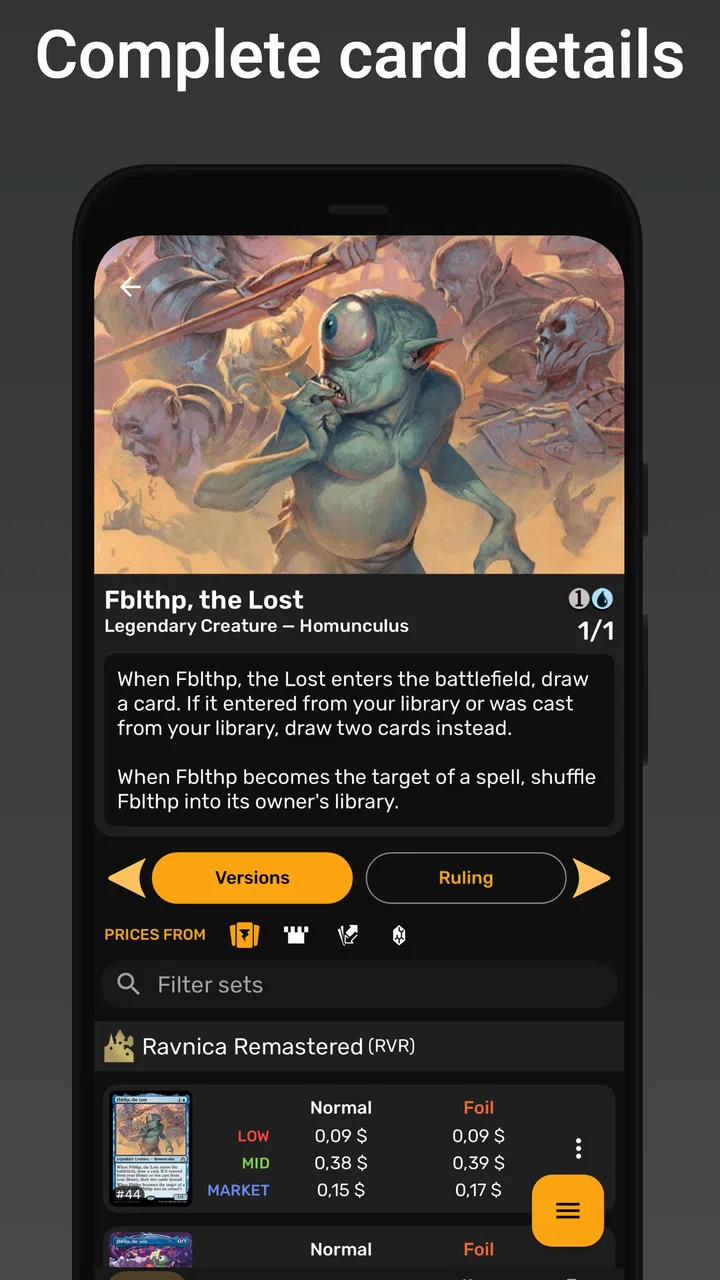
ManaBox MTG is a companion app for Magic: The Gathering players who want to browse cards, build and manage decks, check card details, and keep track of their collection. During testing, its strongest use was as a quick reference tool when planning a deck or looking up a card away from a computer. It is designed for organization and discovery rather than replacing official tournament rules or event registration tools.
02Can I build and manage Magic: The Gathering decks with ManaBox MTG?
Yes. ManaBox MTG provides deck-building features that let you search for cards, add them to lists, organize different builds, and review a deck’s contents. This is useful for testing ideas before purchasing cards or assembling a physical deck. Users should still double-check legality for their chosen format, because card availability, banned lists, and format rules can change and may require confirmation through current official sources.
03Does ManaBox MTG include card prices and collection tracking?
The app is intended to help users manage a Magic: The Gathering collection and view market-related information for cards, depending on the platform, region, and available data sources. Collection tools can make it easier to identify cards you own and cards still needed for a deck. Prices should be treated as estimates, however, since condition, language, edition, seller, location, and market fluctuations can significantly affect a card’s real value.
04Does ManaBox MTG work offline?
Some previously loaded information and locally saved lists may remain accessible without a constant connection, but features that depend on updated card databases, images, prices, synchronization, or account services may require internet access. Before relying on the app at an event or while traveling, it is worth opening your important decks and collection data in advance. Offline behavior can also vary between Android and iOS versions.
05Is ManaBox MTG free, and are there advertisements or premium features?
ManaBox MTG can generally be downloaded and used for free, but availability of advertisements, subscriptions, or premium tools may depend on the current version and the operating system. Before downloading, review the app-store listing for the latest pricing and in-app purchase details. If you plan to use advanced collection, deck, synchronization, or customization features regularly, check exactly which functions are included without payment.
Pros
- Fast card database search with detailed set and printing information.
- Useful collection tools for tracking owned
- wanted
- and traded cards.
- Supports deck building with easy card additions and organization.
- Pricing data helps estimate collection value and compare market trends.
- Clean interface makes browsing large Magic: The Gathering collections simple.
Cons
- Some advanced features may require a subscription or in-app purchase.
- Card prices can vary by region and may not always reflect local stores.
- Large databases may take time to load on slower connections.
- Newly released cards and pricing updates may occasionally appear late.
- The app is focused on Magic: The Gathering and offers little beyond MTG tracking.

ManaBox MTG
Gallery